
Raising Awareness, Part 1
We all have things we intend to work on, but in the heat of it, are we really? Here's what I found in my own discovery.

If you’re reading this Substack, you are already likely trying to improve your craft. I can’t speak for everyone, but for the first few years I started doing this, I would tell myself I was going to work on 5 corners in one session or 4 different skill items per session. Like most people, I wanted a lap time, and before I finished my out lap and the adrenaline kicked in, I’d forget what I was planning to work on. On the rare occasion that I’d remember, the session was winding down, and I’d go back to the pits and kick myself for forgetting to consciously work on what I told myself I would.
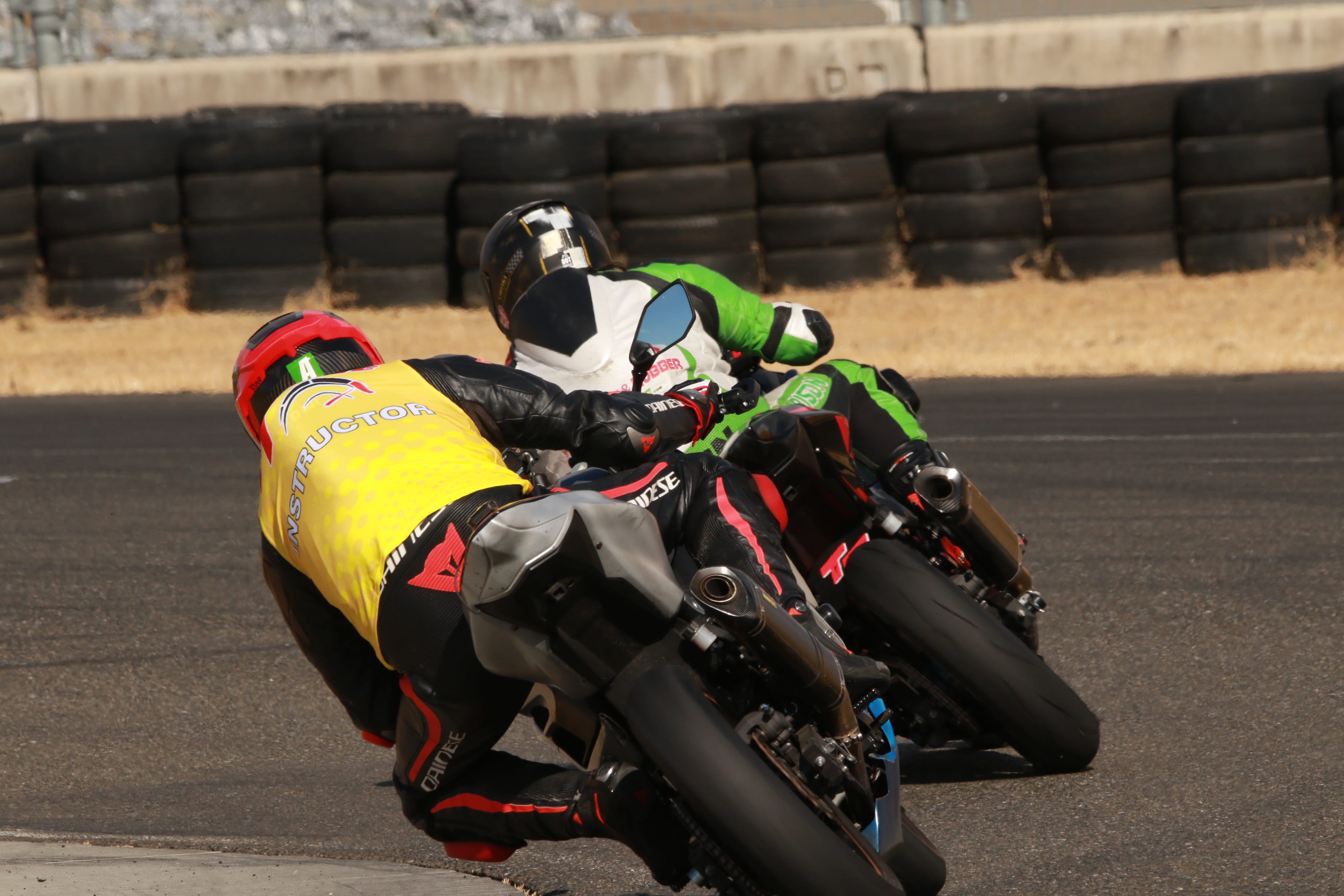
As time went on, I became more disciplined in picking one or two things to work on for the entire day. Unless you’re a pro or have become highly proficient in another fast-paced activity that requires extraordinarily high attention and focus along with physical and mental components, consciously working to improve is going to be difficult past one or two focus areas. At first, I might only have the bandwidth to work on it for 2 or 3 sessions, but as time went on, just focusing on one or two things, I was able to commit and do it every session, nearly every lap.
Once I started this routine, I realized that if I didn’t practice it on the next track day, I’d possibly lose what I had worked on before. I revised my regimen so that I would start the first couple of sessions practicing what I’d worked on from the previous track day, then hopefully before lunchtime it would be well-cemented again, then I could move on to the one or two new things. Other concepts might have taken several days of riding, yet others might take an entire season.
Where did this expectation that I could work on a half dozen corners or skill areas in a single day come from? For me, I believe that it’s rooted in having attended several professional riding and driving schools. At nearly every structured school with several attendees, the curriculum was such that each session had us working on something different. I assumed that because the structure was like that, I should be able to work on 6 or 7 different concepts every day. If you have that ability, I envy and admire you, but most coaches will tell you that you’ll be fortunate to appreciably improve on more than one or two things with a full day’s attention. I will add that I feel that professional instruction is huge. If you don’t have access to a qualified and capable coach for one-on-one instruction, a class is very worthwhile. However, if you’re taking a larger group class, don’t expect to be able to improve on all the subject material and try to pick one or two areas where improvement is either going to improve your safety or is something that’s attainable by you at this point in your journey. Come back to the other things later when you feel you’ve made substantial improvement in the stuff that you committed to.
When I first started working with professional riding coaches one-on-one all day, I was disappointed to find that we were working on just one or two things. I wondered where the value proposition was in that; however, as time went on, I became far more self-aware and realized that this is just how nearly everyone works. As amateurs, most of us just lack the capacity to remember what to work on from one session to the next once we’re on track riding/driving, nonetheless to truly execute on it.
There are some people who can adapt and change what they’re doing in just a session or two. These people are usually already professional or they have a history of other fast-paced sporting endeavors in their repertoire already. I’m fortunate in that I’ve enlisted professional racers to ride my bikes for some feedback and data collection. I recall a couple of instances where I’ve reviewed their first few laps on my bikes, made a suggestion about gear selection or adjusting their brake graph, and they were able to implement it perfectly in the next session. I am in awe of their ability to adapt so quickly. The reality is that for most of us, it takes a good amount of time and conscious practice to cement new concepts or a different approach to things.
Where this is leading us is working to build a greater awareness of what’s going on with our execution and trying to build pathways to make things stick faster. In the off-season and between track days or races, it requires a commitment to practice. This could be riding or driving at the kart track, focusing on skills and concepts. You can do the same thing riding a mountain bike—feeling for front tire traction on a downhill single-track course is an amazing way to get a sense of grip not just in turns but using the front brake to slow down and modulating brake pressure to play with grip. Of course, riding a dirt bike on trails or in an oval is great, though I confess that the body position of dirt vs road is something I struggle with every time I ride dirt. I’m particularly fond of pedal-powered bicycles and e-bikes, both with front suspension, because it’s so easy to see the forks compress and hear the different sounds of the tires based on the load and the ability to see and feel varying degrees of grip.
As the years have gone on and I’ve done this longer and longer, I’m also becoming more aware of finer points in my own riding. Only this year was I much more conscious of where my body came into contact on the bike in different parts of the track. A few years ago, I started practicing having more weight off the seat in bumpy corners and being able to feel the bike working beneath me. As you build this awareness of what you are doing and hoping to work on, progress will come faster and you’ll become more consistent.
In the next installment, I’ll share some things that I do while commuting to work in my car or on a casual street ride that made a big difference in how I improved my brake use at the track.
Note: AI was used to proof the content, but a human wrote this.
Nice piece. I’m a huge fan of coaching. I have been lucky enough to have had a ton of it. The best coaches and schools, had me focus on one thing each session, it multiple things. And sometime I’d have to work on the same thing and/or drill all day. Having a plan. Focusing on one thing at a time has been the best way for me to advance. I also, decide what corners I will pass on each day and those I won’t. I stick to the plan with that too.
Great piece, I’ve been trying to be more intentional with applied skill practice and skill retention from classes. My first time on the track will be in September of this year and I want to make sure to make the most of it.
Looking forward to reading about your commuting tips for improvement.