

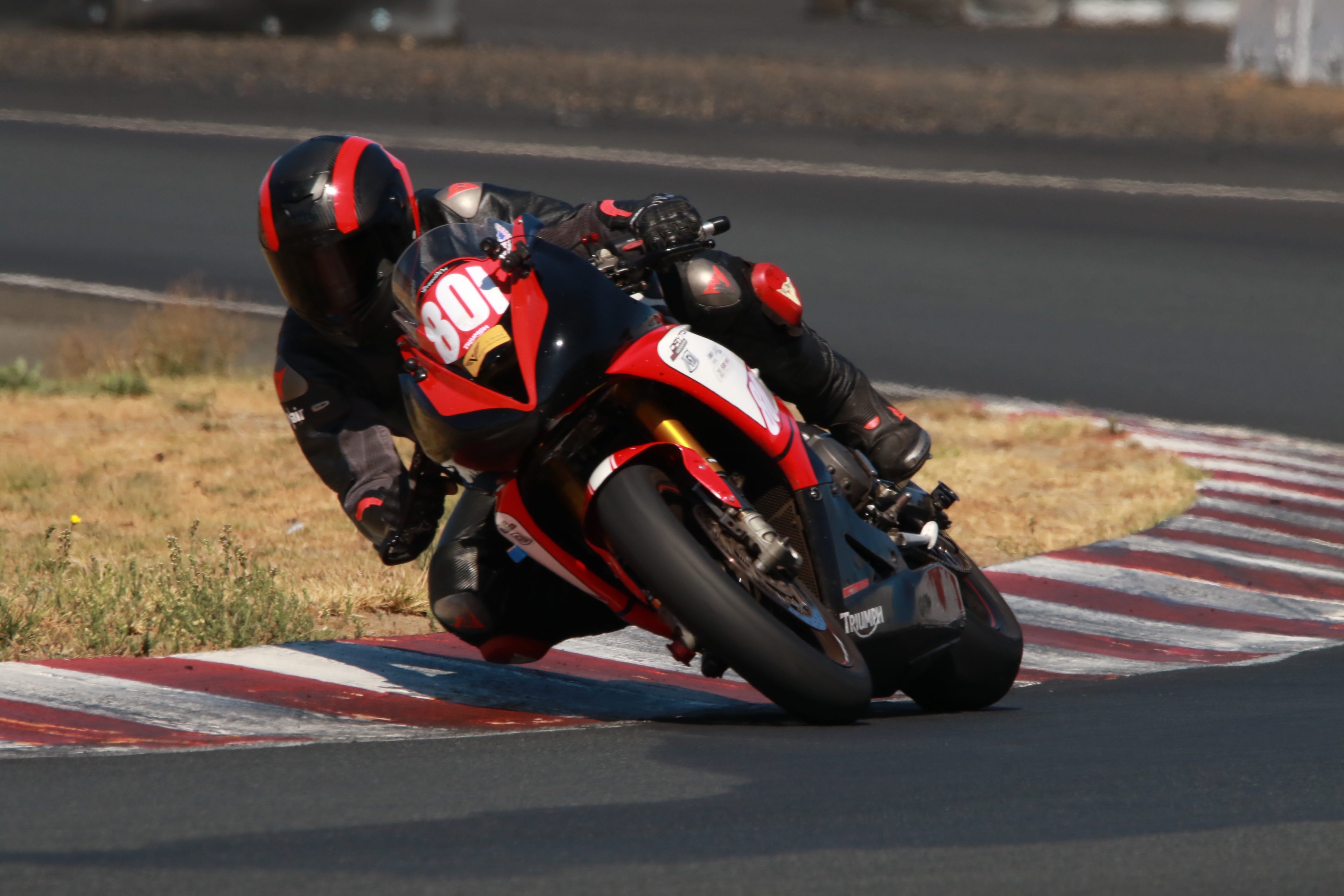
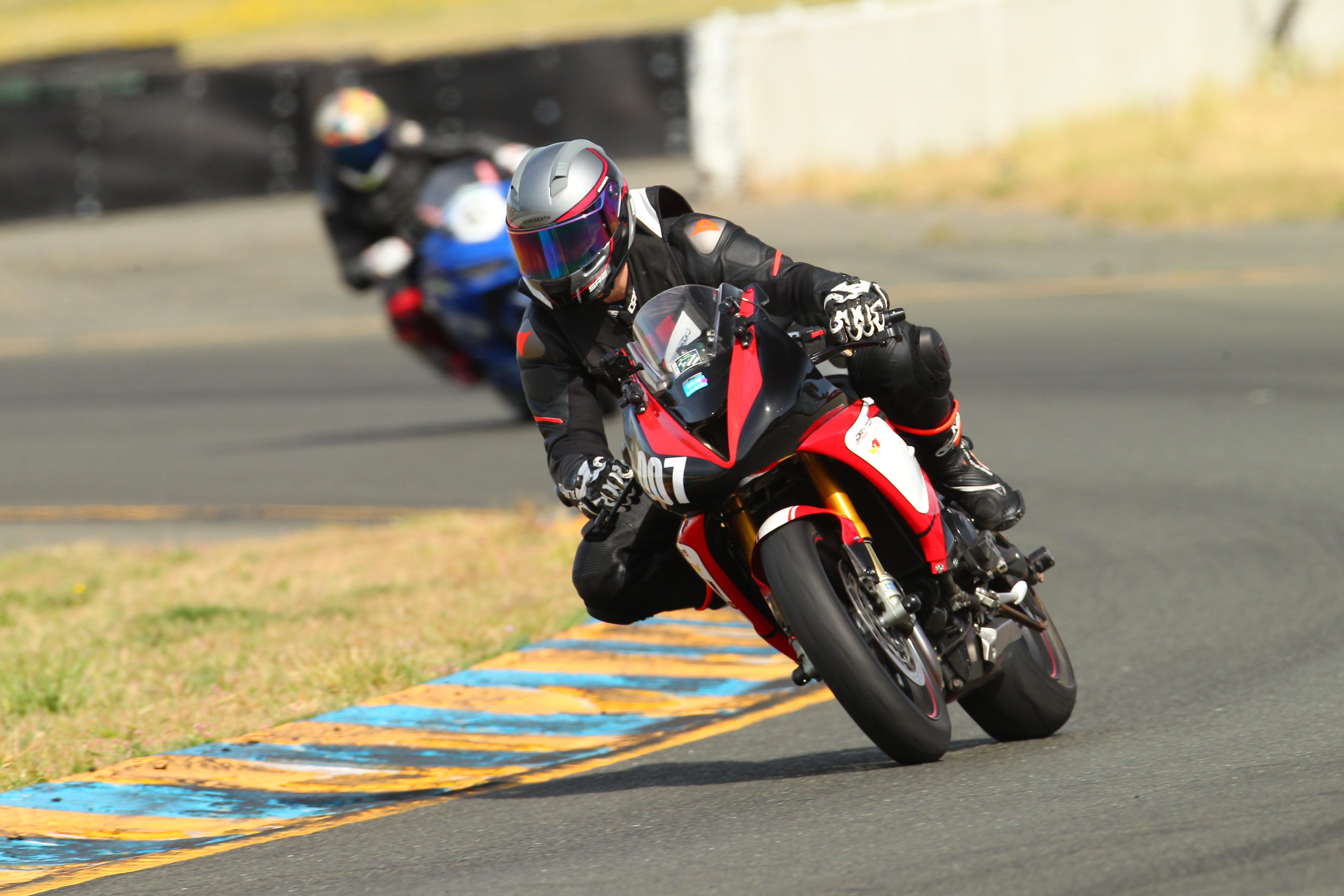
If you’ve done this track riding/driving thing for a while, and you end up behind a rider with precision, you know it right away. These are the riders who go fast, are tight to the inside curb, look smooth, don’t appear tense, and don’t often fall down. You may not even notice them transition their body between corners because it happens early and smoothly. At the highest level of our sport, a lack of precision is immediately recognizable because when they are running at or near limits and they miss a marker, the rider loses time, gets passed, or falls down.
After doing it on my own with the periodic instruction from track day personnel and some schools with some progress but inconsistent guidance, I sought out and worked with some high level coaches. I jumped in with the Rickdickulous school near the end of its run and met the guy whose podcasts I’d been listening to religiously. There Ken Hill paired me with Phil and since then I’ve had the privelge of working with Ken, Mark, Phil, and Cam. The recurring theme with all of them is unrelenting precision. Yes, they’re all quick, but to me the most impressive part was their consistency and ability to put the bike exactly where they intended, corner after corner, lap after lap, all while making it look natural and fluid. By the way, if you ever have the opportunity to do a two-up ride with Ken, do it!
When I first stated track riding, I struggled with precision. By precision, I’m referring to two overall things:
Direction/Vehicle Position—consistently putting the vehicle in the correct location, to make the most out of each corner. In terms of apexes, this means knee over the curb, not a foot or two off the apex.
Control Timing - the ability to use the right control at the right time, in other words, all the ways we control the vehicle, be it braking or throttle application, both on and off; steering inputs, etc. All of this being relevant to the specific corner in question.
These two aspects of precision have taken me years and I’m always working to improve my own, but doing so also led to consistency, pace, and safety. These are the biggest riding priorities for me and if I’m having an ‘off’ day, focusing on these things will result in a satisfying day for me, even if my pace isn’t where I want it. For me, quality is more important than outright pace. It may not mean the fastest lap time but I’m not really a send it kind of rider. The reality of it though is that since focusing on precision, my lap times continue to improve.
Now to build precision, it takes a combination of the bigger items:
Vision - usage of and timing of moving eyes from one visual reference to the next. Don’t let yourself linger on a reference once you know you’re going to hit your mark, as soon as you know you’ll be there, move on to your next visual reference. In longer radius corners, swivel your head to have it going where you want your vehicle to go.
Anticipation - big picture anticipation: prepare days in advance by watching my own videos and videos of others, trying to acclimate myself to the track in question; more specific—anticipate references, turning, end of braking points, body timing, etc. for the upcoming corner.
Body timing - moving my body appropriately and timing it so that my movements don’t upset the chassis; often times this means moving early and I’ll often spend time in the garage days in advance with the bike on stands practicing transitions and building references to where different parts of my body are in contact with the bike. This will vary with different bikes. For instance, with naked bikes and corners leading onto long straights, I want to get moved over particularly early because the lack of aero and more relaxed ergonomics makes high speed transitions challenging.
Control sensitivity - knowing just how much brake pressure and timing as well as how much throttle to get the bike to move to the inside or outside of a corner. This also includes continuing development of sensitivity to just where a given amount of throttle naturally tracks the vehicle. For instance, building familiarity with the appropriate amount of throttle that takes you to the outside of the track on corner exit and putting yourself in the most advantageous position for the next corner. As the pace improves, this will organically take you to a position of building feel for limits of grip, both in acceleration and braking.
I mentioned body transitions. I think one of the most inspirational clips I watched was a booty-cam lap with Pedro Acosta in his moto2 championship winning year in 2023. This is an extremely high-level racer who is anticipating everything. Notice how he will transition well before he exits the corner he’s in. Also note that he doesn’t go back to the center of the seat unless he has a decent amount of straight ahead of him.
Once a rider/driver is able to build consistency in precision (which should be visible in data by overlaying multiple laps at pace—slow points should be virtually identical in location, throttle and brake shapes should be similar, etc.), that’s the point at which it’s safe to building further pace. This could be condensing brake application, more lean, faster/longer throttle application, etc. At this step, it’s completely normal for the rider’s precision to get knocked down a little. Part of it is that things are happening faster, there are new and possibly unfamiliar sensations coming through the chassis of the bike, the rider may be nearer the edge of the track than they are familiar with, etc.. Continuing to work on the new pace, ideally the rider will quickly adjust and restore the precision. If the rider is not able to return to the precision, backing off the pace just enough to bring back that precision for a session or two, then try again.
Being consistently precise demonstrates an understanding of the track, the ability to process what’s about to happen, bike control, and provides the necessary foundation to go faster. When a rider makes a jump in pace, precision often suffers. It’s the rider who can maintain that pace and rebuild precision quickly who will continue to make safe improvements.
A special shout out to Mike Canfield (MC Tech) to helping me edit this post and as always Ken and the team for years of guidance and inspiration.
Really good read- I’m looking to get on track for the first time this year. Your insights on direction/position and timing control were great insights. Cool to read about your process and dedication, I’m looking forward to learning and improving on my bike.